
Hidden Folks: Scavenger Hunt
LifePulse Puzzle Game StudioBoard
4.93.15K Reviews
- Version
- 1.3.4
- Installs
- 10.00M
- Age Rating
- Everyone
Screenshots
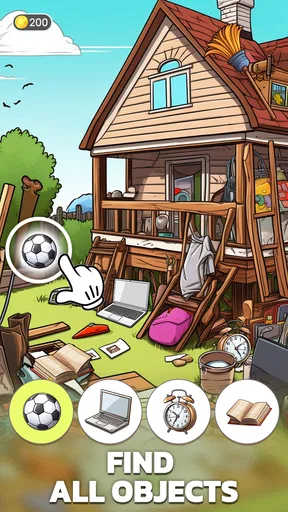
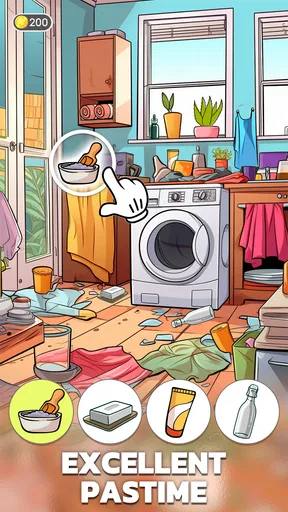
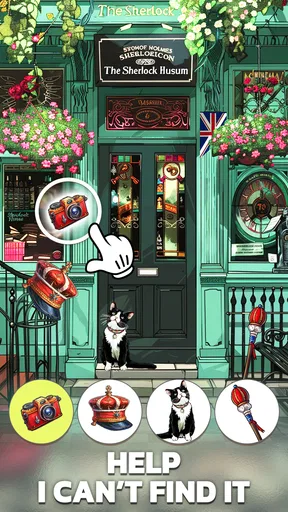

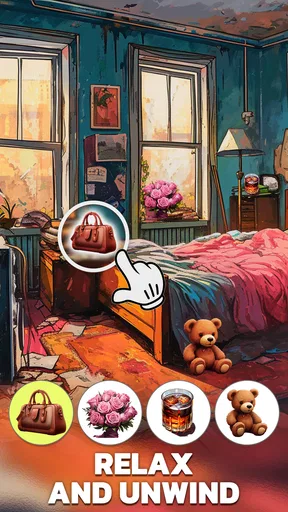
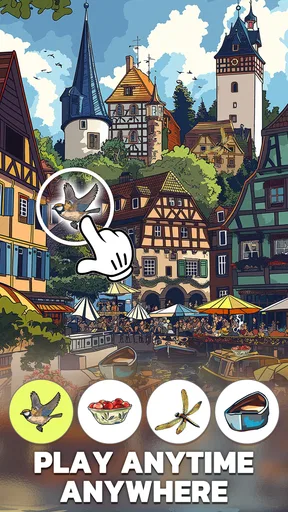
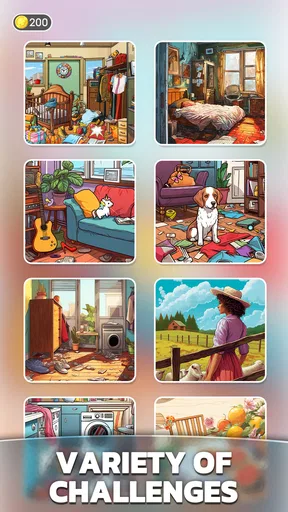
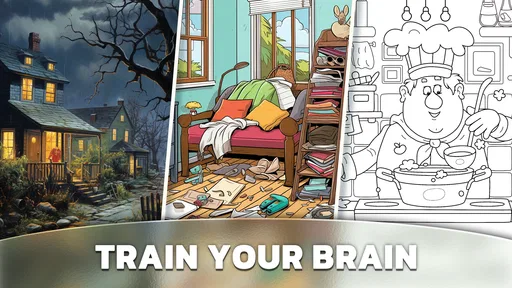
Our Review of Hidden Folks: Scavenger Hunt
 Analysis by Appyee
I approached Hidden Folks: Scavenger Hunt expecting a simple hidden-object distraction, but its real appeal is more specific: it turns searching into a small investigation. The board is packed with visual information, and progress depends on noticing relationships rather than tapping randomly. That verified search-and-find focus gives the game a calmer personality than many board games, while still making each discovery feel earned.
It is a free board game from LifePulse Puzzle Game Studio, suitable for Everyone and available for devices running Android 6.0 or later. The game was released on December 15, 2023, and its current version is 1.2.8. Its 4.9 average from around 205 thousand ratings and more than 10 million installs suggest that the format has connected with a very large audience, but my own recommendation comes from how the central search mechanic feels during ordinary play.
Why the search mechanic matters
The important capability here is not simply finding a hidden object. It is learning to read a crowded scene as a set of clues. Instead of treating the screen like a picture where every area deserves equal attention, I found myself dividing it into zones, checking unusual shapes, following visual patterns, and remembering places that seemed relevant but did not immediately produce an answer.
That difference changes the mood of the game. A typical hidden-object title can become a race against the clock or a test of how quickly I can recognize a familiar item. This one works better when I slow down. The board-game framing makes the search feel like a contained puzzle session, and the scavenger-hunt idea gives each target a reason to keep examining the scene instead of abandoning it after the first few misses.
The strongest part is the shift from tapping to observing. I am not rewarded for touching everything on sight. I get more from forming a small theory, testing it, and then adjusting my attention when the scene does not respond as expected. That makes the game a good fit for players who enjoy visual concentration but do not necessarily want complicated rules or fast reflexes.
The capability also gives the game a useful social quality. I can hand the device to another person and explain what to look for without needing to teach a long rule set. One player may notice a color arrangement, another may spot a tiny figure, and a third may approach the whole board more systematically. The search remains accessible, but it still leaves room for different kinds of attention.
Reading the board instead of guessing
In practice, I get better results when I begin with a broad scan. I look at the overall layout first, noting clusters, empty spaces, repeated shapes, and anything that seems deliberately out of place. Only after that do I move into detailed checking. This prevents the common mistake of staring at one small corner for too long while ignoring the rest of the scene.
A useful habit is to create an imaginary route across the board. I work from one edge toward the other, then return to areas that contain similar visual elements. This is less exciting than frantic tapping, but it reduces duplicate searching. When a target is difficult, the route also tells me which sections I have genuinely examined and which ones I only glanced at.
The game is especially interesting when the target is not visually loud. A bright object in an open patch can be easy, but a small detail surrounded by similar shapes demands a different approach. I found that changing scale mentally helps: first I read the scene as a whole, then I inspect likely pockets, then I step back again. That rhythm is more effective than keeping my attention locked at one level of detail.
I also recommend resisting the urge to assume that the most unusual object is automatically the answer. Crowded puzzle scenes often contain distractions that attract attention precisely because they look important. I make a tentative guess, check it, and move on quickly if it does not fit. The game becomes much less frustrating when a failed observation is treated as information rather than wasted time.
A practical routine for difficult searches
When I am stuck, I use a three-pass routine. The first pass is for large landmarks and obvious contrasts. The second is for repeated groups, such as areas where several similar objects or figures might hide the requested detail. The third is for the edges of those groups, because a target can be overlooked when I focus only on the center of a busy cluster.
Another helpful technique is to say the target’s visual qualities to myself in plain language. Is it likely to be small, isolated, partly surrounded, or similar in color to nearby objects? This keeps me searching for characteristics rather than for a vague memory of the word. It is a subtle change, but it makes the search more deliberate and reduces the temptation to tap every suspicious mark.
I would not call this a shortcut or an advanced mode. It is simply a way of using the game’s design more intelligently. The title rewards attention management, so the best “strategy” is usually better organization. Players who normally lose patience with hidden-object puzzles may find that this approach makes the boards feel more manageable without removing the satisfaction of solving them independently.
What a normal play session feels like
For me, the game works best in short, quiet sessions. I can begin with the intention of solving one search and stop after that, or continue when I am already focused. The absence of a complicated setup makes it easy to use during a break, while the visual density gives the session enough substance to avoid feeling like a disposable tap game.
A realistic example would be an evening when I have ten minutes before doing something else. I open the game, scan the scene, and immediately find a couple of straightforward details. Then one stubborn target slows me down. Instead of treating that as a failure, I map the remaining areas mentally and revisit them by category. If I solve it, the payoff is a small but genuine sense of completion; if I stop, I still feel that I spent the time concentrating rather than merely filling it with noise.
That makes it suitable for shared use too. A parent can search alongside a child, with the adult helping describe where to look rather than simply taking over. Since the content rating is Everyone, the tone is approachable for a broad audience. I would still adjust the amount of help depending on the player’s age and patience, because visual density can be challenging even when the rules are easy to understand.
Where it differs from familiar alternatives
Compared with a traditional board game, this is much easier to start and requires no physical pieces, setup, or table space. Compared with a fast arcade game, it asks for observation instead of reaction speed. Compared with a crossword or word puzzle, the challenge comes from spatial attention and visual comparison rather than vocabulary.
Those differences matter when choosing what to play. If I want competition, rapid turns, or a strong sense of strategic planning, a conventional digital board game may suit me better. If I want a quiet visual challenge that can be understood immediately, this is the more natural choice. It occupies a middle ground: more thoughtful than a casual tapping game, but less demanding in rules than a strategy board title.
It also feels different from hidden-object games built around elaborate stories or elaborate progression systems. Here, the search itself is the main event. That focus is a strength because it keeps the interaction clear, but it may disappoint anyone who needs a dramatic narrative, character development, or a deep collection system to stay interested.
Tradeoffs that become clear over time
The same visual density that makes the boards satisfying can also create fatigue. After a long session, I notice that my attention becomes less reliable, especially when several areas share similar colors and shapes. Taking a break is not just sensible; it is often more efficient than continuing to stare at the same section while my eyes skim over it.
There is also a fine line between a satisfying challenge and a search that feels obscure. When I cannot find a target, I am willing to accept that I missed something, but repeated uncertainty can weaken the momentum. The game is best for people who enjoy the process of looking, not only the moment of success. Players who need constant forward movement may find the slower searches irritating.
The free price makes trying it easy, but “free” does not automatically mean it will suit every routine. A player looking for a fully passive experience may find the concentration requirement too high. Someone who wants a game to play while multitasking will probably miss details and blame the puzzle for a problem caused by divided attention. I get much more from it when I give the board my full focus.
Another tradeoff is replay value in the personal sense. The enjoyment comes from solving and noticing, so once I know where everything is in a scene, the discovery element naturally becomes less powerful. That is not a flaw in the core idea, but it means the game serves curiosity and completion better than endless repetition of familiar boards.
Who benefits most from this kind of puzzle
I would recommend it first to people who enjoy visual scavenger hunts, relaxed board-style play, and puzzles that reward patience. It is also a good option for families or friends who want something they can understand quickly and solve together. The Everyone rating supports its broad accessibility, while the simple premise means a new player can participate without studying instructions for a long time.
It may appeal to adults who want a low-pressure way to practice sustained observation. I would not present it as a formal training tool, but the act of scanning, comparing, and tracking searched areas can make the mind feel engaged without the pressure of a score chase. For me, that is the game’s most useful everyday role: a focused break rather than a background distraction.
It is less suitable for players who prefer direct control, constant rewards, or clear tactical decisions. If your favorite board games involve building an engine, managing resources, or competing against opponents, the search format may feel too solitary and deliberate. Likewise, if you become frustrated whenever a solution is not immediately visible, you may enjoy it more in short sessions than as a marathon.
Device age is unlikely to be a major barrier for many users because the game supports Android 6.0 and later. Still, the practical experience depends on having a screen that makes small visual details comfortable to inspect. On a very small display, I would expect longer searches to feel more tiring than they do on a larger phone or tablet, simply because the board has more information competing for attention.
My recommendation after using it
LifePulse Puzzle Game Studio has built a game around a clear idea and mostly benefits from staying close to it. The search-and-find structure is easy to enter, but it rewards better habits than random tapping. I appreciate that the challenge comes from reading a scene carefully, and I think the game is strongest when I treat each board as a visual investigation rather than as a checklist to rush through.
My advice is to play with a simple method: scan broadly, divide the board into sections, search by visual characteristics, and step away when your attention starts looping. That approach reveals more of what makes the game enjoyable and reduces the frustration caused by repeatedly checking the same places. It also makes the title easier to share with another player, because you can discuss observations instead of handing over control.
Hidden Folks: Scavenger Hunt is not the right pick for everyone, and its slower pace will not replace a competitive board game or a story-driven adventure. But for a free, Everyone-rated visual puzzle that has reached over 10 million installs, it offers a focused experience with a clear identity. I would suggest it to a friend who wants a calm challenge, a family-friendly search game, or a short activity that rewards noticing more than reacting.
Privacy and Permissions
See what permissions an app requests and how it handles your data.
- Wi-Fi connection information
- view Wi-Fi connections
- Other
- view network connections, full network access, control vibration, prevent device from sleeping
Verdict
Strengths of Hidden Folks: Scavenger Hunt
- Hand-drawn visuals make every scene feel lively and distinctive.
- Interactive objects reward curiosity beyond simply finding hidden characters.
- Humorous sound effects add personality to each crowded environment.
- Levels offer a relaxing pace without timers or stressful penalties.
- Works well for short play sessions on phones and tablets.
Limitations of Hidden Folks: Scavenger Hunt
- Some objects are extremely small, making searches difficult on smaller screens.
- Later scenes can feel overwhelming when many characters overlap.
- Progress may slow considerably if you miss one obscure target.
- The monochrome artwork can make similar shapes hard to distinguish.
- Limited replay value once every hidden person and object is found.
Other Releases by LifePulse Puzzle Game Studio
View All


Similar Picks in This Category
View All
Ludo King®
Gametion4.1

Ludo
Yarsa Games4.6

Tile Master® - Matching Game
Higgs Studio3.6

Checkers Online
CC Games4.6

Dominoes
Loop Games4.7

Chess
Chess Prince4.6
Frequently Asked Questions
What is Hidden Folks: Scavenger Hunt, and how does the game work?
Hidden Folks: Scavenger Hunt is a hand-drawn hidden-object puzzle game in which you explore detailed, interactive scenes to find specific people, animals, and objects. Instead of simply tapping static pictures, you can interact with the environment by opening doors, moving objects, and triggering amusing animations or sounds. Each level provides clues, but careful observation is usually essential.
Is Hidden Folks: Scavenger Hunt suitable for children and families?
The game is generally suitable for family play because it focuses on observation, exploration, and lighthearted humor rather than violence or complicated competition. However, some scenes can be visually busy, and younger children may need help reading clues or understanding what to search for. Parents should also check the store listing for the current age rating and content information.
Can I play Hidden Folks: Scavenger Hunt offline?
Hidden Folks: Scavenger Hunt is designed primarily as a self-contained puzzle experience, so the main gameplay can generally be enjoyed without a constant internet connection after installation. An internet connection may still be required for downloading the app, receiving updates, restoring purchases, or using platform services. Availability of offline features can vary slightly between Android and iOS versions.
Does Hidden Folks: Scavenger Hunt include hints or help when a level becomes difficult?
The game offers clues that point you toward the type of character or object you need to find, but it expects you to investigate the scene rather than solve everything automatically. Some targets can be cleverly hidden behind interactive elements or among similarly drawn characters. If you get stuck, scanning the entire area carefully and experimenting with clickable objects is usually more helpful than rushing.
Is Hidden Folks: Scavenger Hunt free to download, and does it contain advertisements or in-app purchases?
The price and purchase model may differ depending on the platform, region, and current store promotion. Hidden Folks has traditionally been offered as a premium-style game in some stores, meaning users may pay upfront rather than dealing with frequent advertisements. Before downloading, check the official Google Play or App Store page for the latest price, supported devices, and any listed in-app purchases.
Play our best games!


